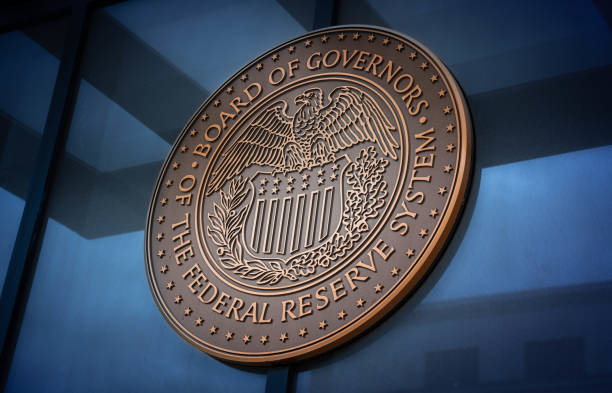
Although economists broadly expect the Federal Open Market Committee to leave benchmark interest rates unchanged, investors remain focused on the central bank's assessment of inflation, labour-market conditions and broader economic activity. Market participants are seeking clearer guidance on whether recent economic data strengthen the case for policy easing later this year or reinforce the need to maintain restrictive monetary conditions for longer.
The meeting comes at a time when financial markets are balancing competing economic signals. Inflation has moderated from its earlier peaks, yet price pressures in several sectors remain above the Federal Reserve's long-term target. At the same time, labour-market resilience and steady consumer spending have continued to support economic growth, complicating the central bank's efforts to restore price stability without undermining business activity.
The outcome carries significance well beyond the United States. Decisions taken by the Federal Reserve frequently influence global bond markets, foreign exchange movements and international investment flows. Emerging markets, in particular, remain sensitive to changes in US monetary policy, as higher American interest rates can strengthen the dollar, increase borrowing costs and redirect capital away from developing economies.
Businesses are also closely monitoring the meeting for signals regarding financing conditions. Higher interest rates have increased the cost of corporate borrowing over the past two years, prompting many companies to delay acquisitions, infrastructure projects and expansion plans while prioritising operational efficiency and balance-sheet resilience.
Institutional investors increasingly believe that the Federal Reserve's communication may prove more influential than the policy decision itself. Market attention is expected to focus on revised economic projections and commentary from Chair Jerome Powell regarding inflation risks, labour-market trends and the conditions required before policymakers consider reducing borrowing costs.
Economists caution that the central bank continues to face a delicate balancing act. Easing policy prematurely could reignite inflationary pressures, while maintaining restrictive conditions for an extended period may slow business investment and weaken employment growth.
For governments, corporations and investors alike, the meeting represents a critical indicator of the broader global economic outlook. Monetary policy remains one of the principal forces shaping capital allocation, corporate financing and financial market performance across advanced and emerging economies.
What to watch: Investors will analyse the Federal Reserve's policy statement, Chair Powell's press conference and any revisions to economic forecasts for indications of the likely timing of future interest-rate adjustments. Markets will also monitor subsequent inflation and employment data to assess whether the central bank's outlook aligns with evolving economic conditions.