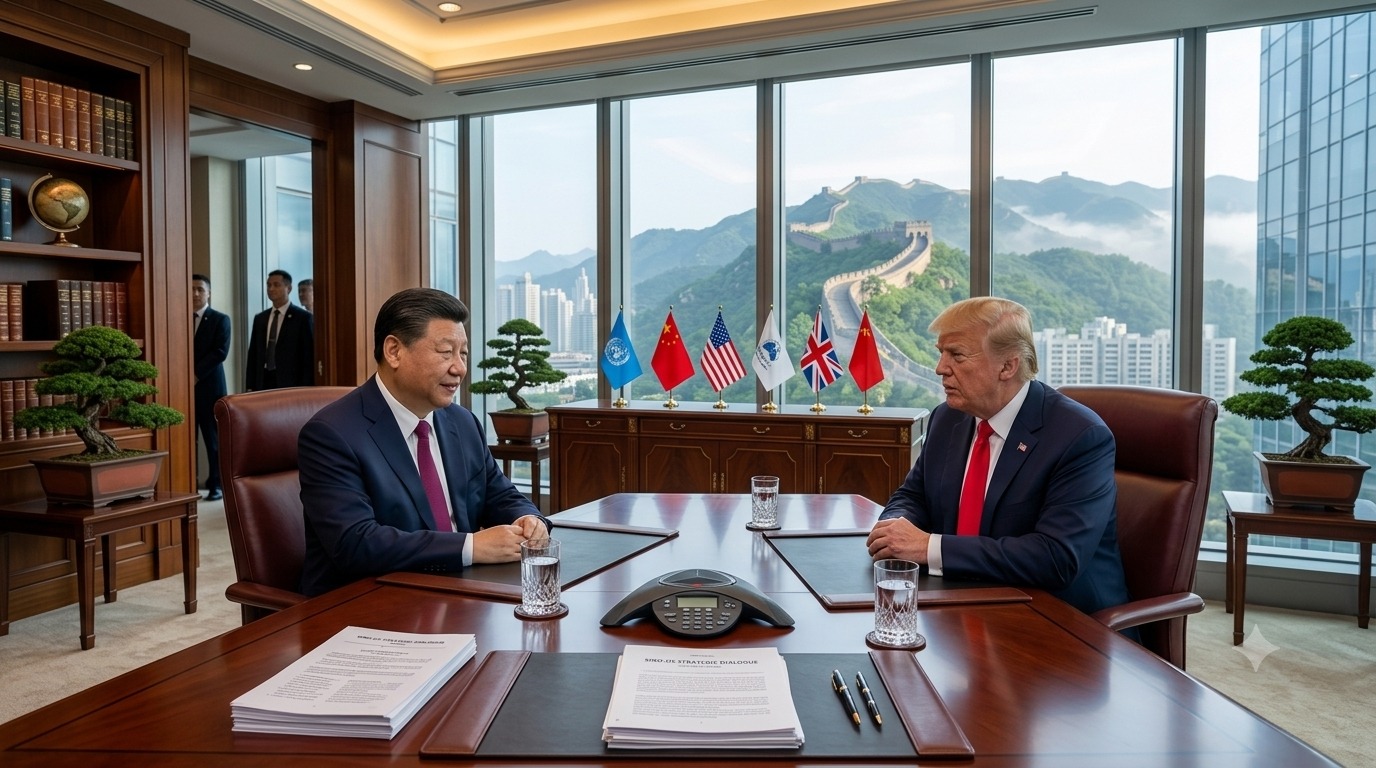
According to officials involved in the latest round of discussions, the negotiations have focused on establishing greater predictability in bilateral trade relations, including commitments aimed at preventing tariffs from rising beyond agreed thresholds. While a comprehensive agreement has yet to be reached, the developments have been interpreted by financial markets as a constructive step towards stabilising one of the global economy's most consequential commercial relationships.
The prospect of greater tariff certainty carries significant implications for multinational corporations that depend on integrated supply chains spanning Asia, North America and Europe. Manufacturers, technology firms, logistics providers and consumer goods companies have spent several years adapting production strategies in response to shifting trade policies, increasing costs and regulatory uncertainty.
Business leaders say a more predictable trading environment could improve long-term investment planning and encourage companies to revive capital expenditure that had been postponed amid concerns over policy volatility. Export-oriented industries are expected to benefit most should negotiations continue to reduce uncertainty surrounding customs duties and market access.
Financial markets also responded positively to signs of diplomatic engagement, with investors viewing improved dialogue as supportive of global trade volumes and corporate earnings. Analysts noted that reducing the risk of additional tariffs may ease pressure on manufacturing costs, improve supply-chain efficiency and strengthen business confidence across multiple sectors.
Nevertheless, economists caution that significant structural issues remain unresolved. Areas including technology transfer, industrial policy, intellectual property protection and strategic investment continue to represent points of disagreement between Washington and Beijing. Any future deterioration in diplomatic relations could therefore undermine recent progress and reintroduce uncertainty into international markets.
Governments and institutional investors will continue monitoring negotiations closely for evidence that both sides remain committed to maintaining commercial engagement while addressing broader economic and national security concerns.
Why it matters: Trade stability between the United States and China influences investment decisions, manufacturing activity and global supply chains far beyond the two economies themselves. Greater certainty over tariff policy could improve business confidence, encourage cross-border investment and support international economic growth, while any reversal would risk renewed disruption to global commerce and financial markets.