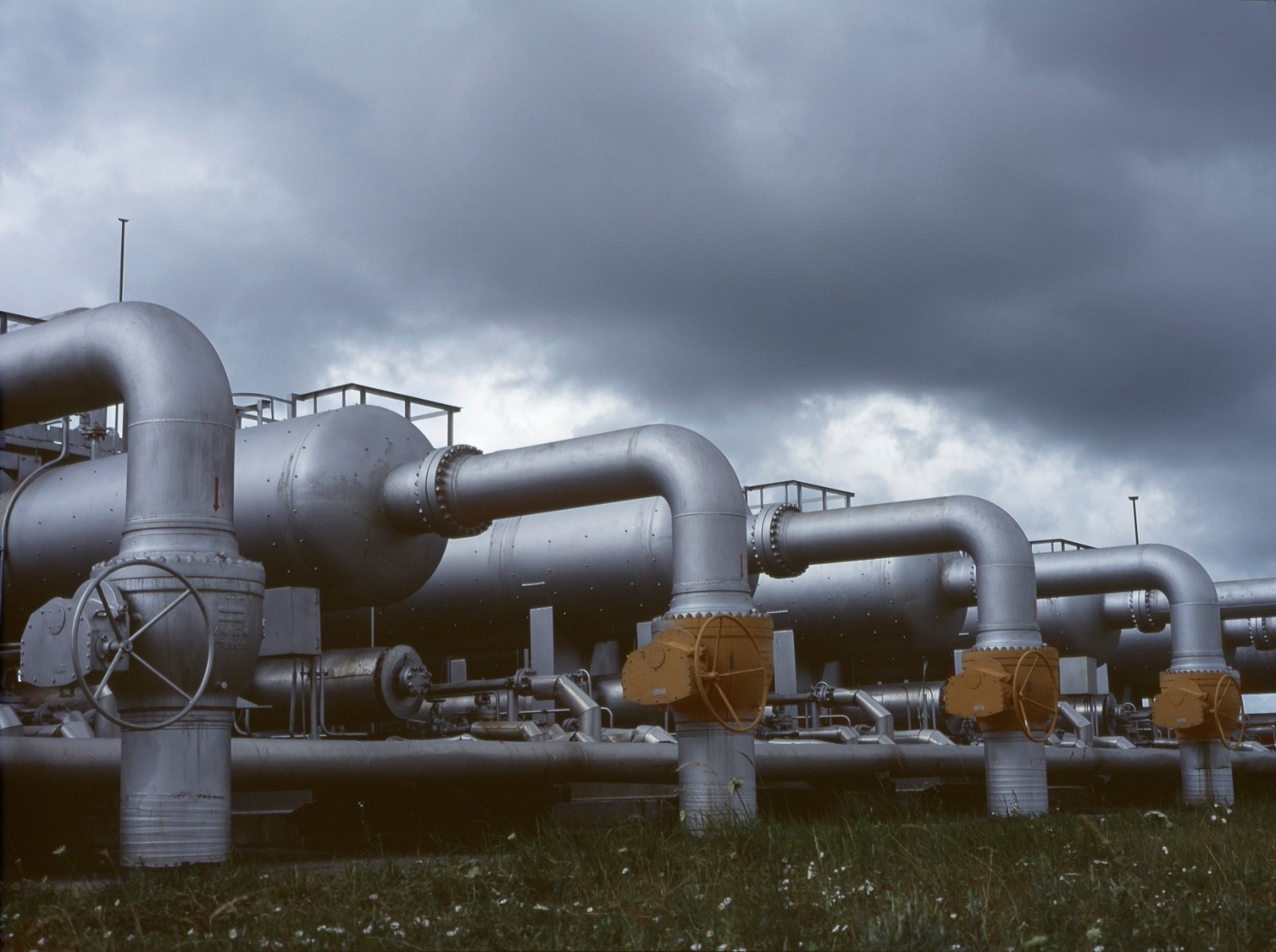
The investment reflects growing confidence among major energy producers that natural gas will continue playing a central role in the global energy transition, despite accelerating investment in renewable technologies.
The project will expand production capacity while supporting downstream industries including petrochemicals, manufacturing and electricity generation. Officials say the investment is intended to strengthen domestic industrial competitiveness while reinforcing the United Arab Emirates' position as a reliable supplier to international markets.
Energy analysts note that demand for natural gas continues to increase across Asia and parts of Europe as governments seek alternatives capable of supporting economic growth while reducing reliance on higher-emission fuels.
The latest expansion also highlights intensifying competition among energy-producing nations to secure long-term market share as global consumption patterns evolve.
Infrastructure investment remains a critical component of the strategy. Processing facilities, pipelines, export terminals and associated logistics networks will require significant capital expenditure, generating opportunities for engineering firms, construction companies and industrial equipment manufacturers.
The announcement comes amid heightened geopolitical uncertainty affecting global energy markets. Governments and businesses are placing increasing emphasis on supply reliability after repeated disruptions linked to conflict, sanctions and shipping risks over recent years.
Economists say sustained investment in energy infrastructure provides broader economic benefits through job creation, technology transfer and industrial diversification, particularly in economies seeking to expand beyond traditional hydrocarbon exports.
For international investors, large-scale projects of this nature demonstrate that energy infrastructure continues attracting long-term capital despite the rapid growth of renewable energy investment.
Business leaders also view natural gas as an important transition fuel capable of supporting electricity generation and industrial production while renewable capacity expands.
As governments pursue increasingly complex energy strategies balancing affordability, security and decarbonisation, Abu Dhabi's latest investment signals that conventional energy infrastructure will remain an important pillar of the global economy for years to come.