
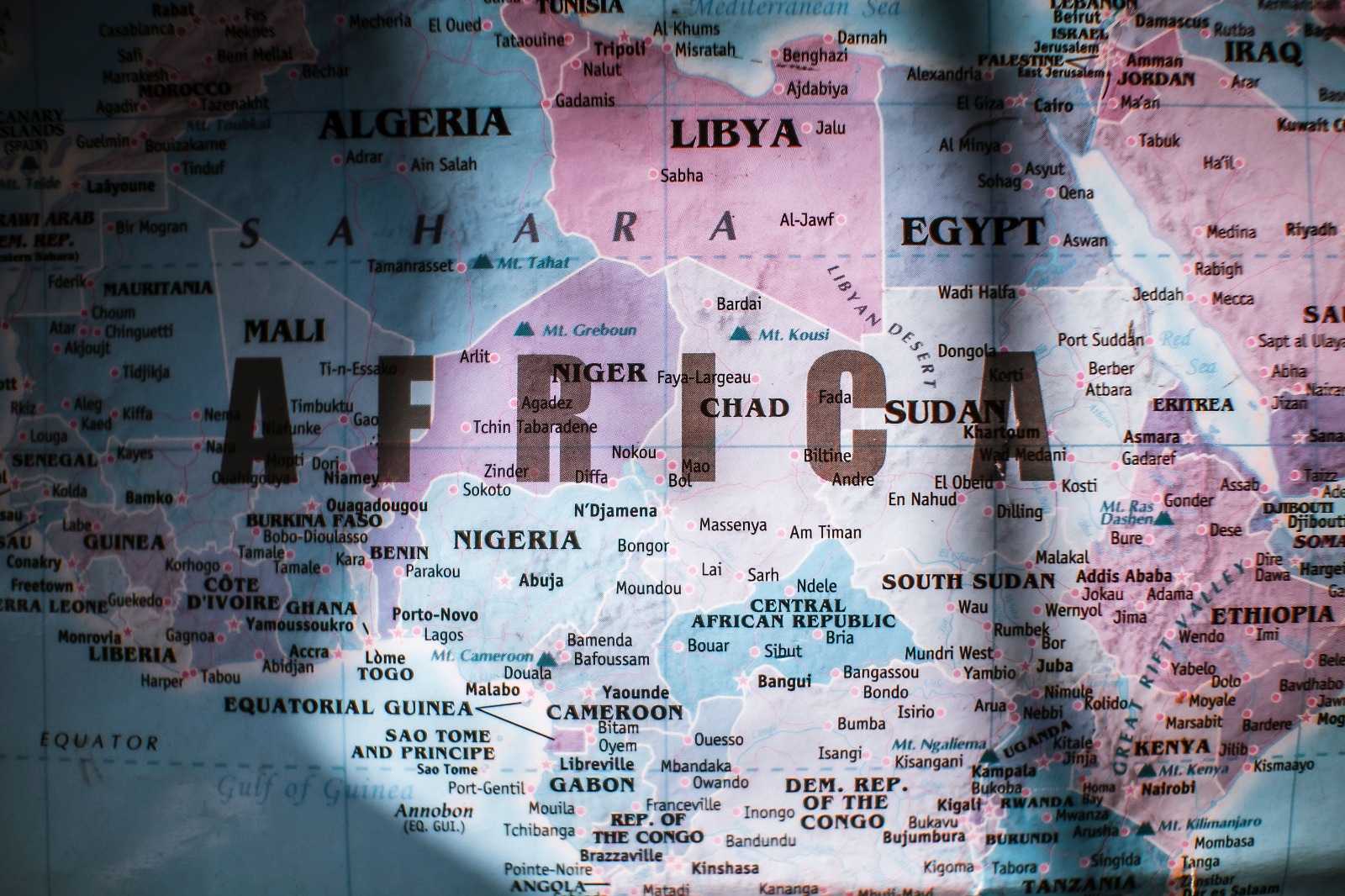
The strategic question for African economies is no longer simply how much they trade, but how resilient, diversified and strategically connected their trade networks are.
The African Development Bank's African Economic Outlook 2026 identifies geopolitical fragmentation, trade tensions, regional conflicts and declining international financial flows as structural pressures requiring Africa to rethink how it mobilises development finance and manages economic policy. The Bank projects African growth at 4.2% in 2026, but warns that prolonged supply-chain and geopolitical shocks could weaken growth further.
For businesses, the implications are immediate. Export markets that once appeared predictable can become exposed to tariffs. Shipping routes can change overnight. Imported inputs can become more expensive. And manufacturing locations that were previously selected primarily for labour or resource advantages are increasingly being evaluated according to geopolitical access, logistics resilience and proximity to multiple markets.
This creates a paradox for Africa.
Global fragmentation is a threat because many African economies remain highly dependent on external markets, imported energy, foreign manufactured goods and commodity exports. But it is also an opportunity because companies seeking to diversify production and sourcing are creating demand for new manufacturing, logistics and processing locations.
The countries best positioned to capture that opportunity will be those able to combine market access, infrastructure, political stability, industrial capacity and regional connectivity.
AfCFTA could become the continent's most important strategic buffer—but only if African governments move beyond tariff reduction and build the infrastructure, customs systems, financial mechanisms and regional value chains required to make continental trade commercially viable.
Why It Matters
For much of the post-Cold War period, globalisation was built around increasingly integrated supply chains.
Companies could concentrate production in the lowest-cost locations, source components from multiple countries and move goods through predictable maritime corridors.
That model is now under pressure.
The US-China strategic rivalry, Russia's war against Ukraine, conflicts in the Middle East, protectionist trade policies, industrial subsidies and growing competition for critical minerals are encouraging governments and companies to reconsider the risks of excessive supply-chain concentration.
UN Trade and Development reports that more than 80% of world trade by volume is transported by sea, while geopolitical tensions have forced vessels away from traditional Red Sea routes and towards the Cape of Good Hope. Longer journeys have increased delays, costs and emissions and exposed developing economies to greater logistics uncertainty.
For Africa, this matters because the continent sits at the intersection of several major trade corridors.
The Suez Canal connects Asian manufacturing with Europe. The Red Sea links East Africa with global maritime networks. The Atlantic provides access to the Americas and Europe. The Cape route connects Asia with Europe and the Atlantic. Meanwhile, emerging corridors such as Lobito are attempting to connect mineral-producing economies in Central Africa to Atlantic export markets.
Trade geography is therefore becoming strategic geography.
The New Trade Map
The old question for an investor was often:
Where can we produce most cheaply?
The new question is increasingly:
Where can we produce reliably, access multiple markets and withstand geopolitical disruption?
That distinction could materially alter Africa's competitive landscape.
Countries with established ports, industrial ecosystems and multiple trade agreements are particularly well placed to benefit.
Morocco
Morocco is among the clearest examples.
Its proximity to Europe, automotive manufacturing base, industrial zones and established logistics infrastructure give it a strong position as companies seek production locations close to European markets.
Its competitive advantage is not simply low-cost labour. It is the combination of geography, industrial policy, infrastructure and integration with European supply chains.
Egypt
Egypt's position around the Suez Canal gives it an unusual strategic advantage.
The country can serve European, Middle Eastern and African markets while developing industrial capacity in sectors including chemicals, fertilisers, cement and manufacturing.
Reuters has reported a significant increase in Egyptian exports of energy-intensive products such as cement, fertilisers and chemicals, illustrating how industrial capacity can turn trade disruption and shifts in global production into new export opportunities.
Kenya and East Africa
East Africa offers a different opportunity.
Kenya, Tanzania, Uganda, Rwanda and Ethiopia are increasingly connected through regional infrastructure, manufacturing, agricultural value chains and services.
The AfDB's 2026 East Africa outlook projects regional growth of around 6.2% on average in 2026–27 and identifies regional integration, infrastructure investment and AfCFTA implementation as potential drivers of deeper trade and industrialisation. At the same time, it warns that geopolitical fragmentation could raise capital costs, disrupt supply chains and reshape investment flows.
This makes East Africa both an opportunity and a test case for whether regional integration can convert strong domestic demand into scalable cross-border production.
Southern Africa
South Africa remains the continent's most sophisticated industrial economy, with established automotive, mining, financial and manufacturing capabilities.
But its exposure to global tariffs also illustrates the risks of fragmentation.
South African manufacturers have faced pressure from US trade measures, particularly in steel and other industrial exports.
At the same time, the region is becoming strategically important for critical minerals, energy and industrial logistics.
The renewed India-Southern African Customs Union trade negotiations illustrate how new trade relationships are emerging around both market access and critical-mineral supply chains.
The Industries Most Exposed
Geopolitical fragmentation will not affect African industries equally.
The greatest exposure exists where businesses depend heavily on international markets, imported inputs or concentrated trade preferences.
Apparel and Textiles
African apparel manufacturers have historically relied heavily on preferential access to markets such as the United States.
That dependence creates vulnerability when trade preferences change.
The United States reauthorised AGOA in February 2026 through 31 December 2026, retroactively restoring preferential treatment after the programme's September 2025 lapse.
The episode nevertheless demonstrated the strategic risk of depending on a single external market.
For manufacturers, the lesson is clear: trade preference is an advantage, not a business model.
Companies should increasingly build diversified customer bases across the US, Europe, the Middle East and African markets.
Automotive Manufacturing
Automotive manufacturing illustrates both the opportunity and complexity of regional integration.
Modern vehicles contain thousands of components sourced across multiple jurisdictions. Tariffs on vehicles or parts can therefore affect entire production ecosystems.
Africa's emerging automotive hubs—particularly Morocco and South Africa—could benefit from supply-chain diversification, but only if local component industries deepen alongside assembly.
The strategic prize is not simply assembling vehicles.
It is building regional automotive value chains.
Agriculture and Food Processing
Agriculture may become one of the biggest beneficiaries of stronger regional trade.
Food supply chains are inherently vulnerable to shipping disruption, currency volatility and geopolitical shocks.
Producing and processing more food within Africa could reduce external exposure while creating new markets for farmers and manufacturers.
The opportunity is particularly strong where countries can combine agricultural production with processing, cold-chain infrastructure, packaging and regional distribution.
Energy and Fertilisers
Energy is one of Africa's greatest strategic vulnerabilities.
The AfDB's 2026 analysis of the Middle East conflict noted that around 80% of Africa's imported oil and 50% of refined petroleum imports come from the Middle East region, leaving many economies exposed to geopolitical shocks.
This makes energy diversification a trade strategy as much as an energy strategy.
Countries investing in domestic gas, renewables, electricity grids, refining capacity and regional power pools can reduce their exposure to external energy disruptions.
Fertiliser is similarly strategic because agricultural production depends heavily on imported inputs in many markets.
The Critical Question: Can AfCFTA Become a Buffer?
The answer is yes—but not automatically.
AfCFTA provides Africa with something increasingly valuable in a fragmented global economy: a mechanism for creating a larger internal market.
Its significance is therefore greater than tariff reduction.
A genuinely integrated African market could allow businesses to redirect sales when overseas markets become less accessible, source inputs regionally when global supply chains are disrupted and build production around continental rather than national demand.
The World Bank estimates that deep implementation of AfCFTA could raise Africa's exports to the rest of the world by 32% by 2035, while intra-African exports could increase by 109%, with manufactured goods leading the expansion.
But those gains depend heavily on implementation.
Tariff liberalisation alone cannot overcome congested borders, unreliable transport, inconsistent standards, expensive payments and fragmented customs systems.
The IMF notes that implementation will require improvements in customs administration, electronic transit documentation, coordinated border management and the removal of non-tariff barriers. It also estimates that 97% of intra-African goods trade meeting AfCFTA origin requirements is intended eventually to become duty-free.
This is where the real strategic test begins.
AfCFTA can become a buffer against global fragmentation only if Africa builds the infrastructure necessary to make African trade cheaper and faster than relying on distant supply chains.
The Geography of Opportunity
The emerging trade environment is likely to favour African economies that function as regional platforms, rather than simply national markets.
These platforms have several characteristics:
Deep-water or strategically located ports.
Reliable road and rail corridors.
Large or rapidly growing consumer markets.
Industrial and manufacturing capacity.
Multiple trade agreements.
Strong customs and border systems.
Access to energy.
Stable investment environments.
Ability to connect landlocked neighbours to global markets.
This changes the competitive hierarchy.
A smaller economy with excellent logistics and market access can become more commercially important than a larger economy with weak infrastructure.
That is why corridors matter.
The Lobito Corridor, for example, is increasingly being positioned as an alternative route for minerals from the Democratic Republic of Congo and Zambia towards the Atlantic. Private investment is beginning to follow the infrastructure opportunity: South African rail operator Traxtion announced a 3.4-billion-rand investment in locomotives and wagons as regional rail networks open further to private operators.
The broader lesson is that trade corridors can become industrial corridors.
Once transport improves, warehouses, processing facilities, manufacturers, financial services and logistics companies can cluster around them.
Who Gains—and Who Is at Risk?
Potential Winners
The likely winners are not limited to commodity exporters.
They include:
Manufacturing hubs capable of serving multiple markets.
Port and logistics economies positioned along strategic corridors.
Countries with diversified trade relationships spanning Europe, Asia, the Middle East and Africa.
Resource-rich economies that move from extraction towards processing.
Agro-processing centres able to supply regional food markets.
Digital trade hubs capable of lowering transaction and payment costs.
Financial centres that can provide trade finance, insurance and currency-risk management.
The Most Exposed
The greatest vulnerabilities lie with:
Economies dependent on a narrow export basket.
Manufacturers dependent on one preferential market.
Businesses relying heavily on imported intermediate goods.
Landlocked economies without efficient corridors.
Industries dependent on vulnerable maritime routes.
Governments with limited fiscal space to absorb external shocks.
Companies without adequate currency and supply-chain risk management.
This means trade fragmentation should be treated as a corporate risk-management issue, not simply a government policy issue.
Strategic Risks
The most important risk is that fragmentation produces trade diversion without industrial transformation.
Africa could become a destination for companies seeking alternative production locations without developing deep domestic supply chains.
That would create assembly jobs and export revenues but leave much of the value captured elsewhere.
A second risk is the emergence of competing regional blocs.
If African economies respond individually to global pressure—negotiating separate bilateral agreements, imposing unilateral restrictions and protecting domestic industries—AfCFTA's strategic value could weaken.
A third risk is infrastructure.
A trade agreement cannot compensate for a port that cannot handle volume, a railway that cannot move freight or a border that takes days to clear.
Finally, there is the risk of capital scarcity.
The AfDB estimates Africa faces an annual development financing gap exceeding $1.3 trillion. Its 2026 outlook argues that the solution requires stronger domestic resource mobilisation, deeper capital markets, public-private partnerships and greater African agency in global finance.
Trade resilience therefore depends partly on financial resilience.
What Decision-Makers Should Do Next
For Governments
Governments should stop treating trade policy, industrial policy and infrastructure policy as separate agendas.
They are increasingly the same strategy.
Priority should be given to:
Accelerating AfCFTA implementation.
Removing non-tariff barriers.
Digitising customs and border procedures.
Investing in strategic transport corridors.
Developing regional industrial clusters.
Expanding reliable domestic energy supply.
Harmonising standards.
Developing trade-finance and export-credit mechanisms.
Diversifying external trading partners.
Strengthening regional value chains.
For Business Leaders
Companies should map their exposure across five dimensions:
Market: Where do we sell?
Inputs: Where do our critical components come from?
Logistics: Which routes are essential?
Currency: Which currencies determine our margins?
Policy: Which trade preferences or tariffs determine competitiveness?
The next step should be scenario planning.
What happens if a key market imposes a 20% tariff?
What happens if shipping through a critical corridor is disrupted for 60 days?
What happens if a major imported input becomes unavailable?
Businesses that answer these questions before disruption occurs will have a significant advantage.
For Investors
Investors should look beyond individual exporters and identify the infrastructure behind trade.
The most attractive opportunities may emerge in:
Ports.
Rail.
Warehousing.
Cold chains.
Industrial parks.
Trade finance.
Export credit.
Digital customs.
Cross-border payments.
Renewable energy.
Regional manufacturing.
Commodity processing.
The fragmentation of global trade is therefore creating an investment thesis around African connectivity.
For AfCFTA Institutions
AfCFTA's next phase should focus less on announcing agreements and more on making continental trade commercially predictable.
The priority should be implementation.
Businesses need to know:
What tariff applies?
What qualifies as African origin?
How quickly can goods cross borders?
What standards apply?
How can exporters obtain financing?
How can disputes be resolved?
How can companies receive payment efficiently?
The more predictable these answers become, the greater AfCFTA's value as a strategic economic buffer.
Executive Outlook
Global trade is unlikely to return to the highly predictable, efficiency-first model that defined much of the previous era.
Geopolitics is now embedded in corporate supply-chain decisions.
Tariffs are industrial policy.
Ports are strategic assets.
Critical minerals are geopolitical assets.
Energy security is trade security.
And regional trade agreements are increasingly instruments of economic resilience.
For Africa, this creates a strategic choice.
The continent can remain exposed to external shocks, exporting commodities to competing global blocs while importing the majority of higher-value manufactured goods.
Or it can use fragmentation as a catalyst to deepen regional integration, develop industrial capacity and build more diversified trade relationships.
The second path is significantly harder, but potentially transformative.
AfCFTA gives Africa the institutional architecture for that transition. The question is whether governments, businesses and investors will build the physical and financial infrastructure needed to make it work.
The emerging winners will not necessarily be the countries with the largest resource endowments.
They will be the countries that can connect resources, factories, markets and capital efficiently.
For executives, the strategic priority is therefore to diversify supply chains and markets while increasing exposure to Africa's growing regional economy.
For investors, the opportunity is to finance the corridors, industrial platforms and financial systems that make this diversification possible.
For policymakers, the priority is to turn AfCFTA from a trade agreement into operating infrastructure for the African economy.
The business map of Africa is being redrawn.
The question is no longer whether geopolitical fragmentation will change African trade.
It already has.
The question is which African economies will convert that disruption into strategic advantage, and which will remain exposed to a trading system they do not control.
Sources & Methodology
This Premium Intelligence analysis combines the Aldrenor editorial framework with current institutional research, trade-policy developments, shipping data and market reporting. The Aldrenor blueprint defines Intelligence as decision-support content incorporating implications, scenarios and strategic judgement, with a higher evidence threshold, methodology, assumptions and risk flags than standard commentary.
Primary institutional sources include the African Development Bank's African Economic Outlook 2026, its regional economic outlooks and policy analysis; the World Bank's work on African regional integration and AfCFTA; IMF analysis of AfCFTA customs implementation and US tariff exposure; UN Trade and Development's Review of Maritime Transport 2025; and official US government documentation concerning the 2026 AGOA reauthorisation. Corporate and market developments were cross-checked against Reuters reporting where relevant.
The analysis is designed to identify structural trade, investment and supply-chain implications rather than provide short-term market forecasts. References to potential winners, risks and opportunities represent analytical assessments based on current trade patterns, policy direction, infrastructure positioning and institutional evidence. This article is for informational purposes and does not constitute investment, financial or legal advice.