That distinction matters.
The continent attracted approximately US$70 billion in foreign direct investment in 2025, according to UN Trade and Development (UNCTAD). Although that was below the exceptional 2024 level, it remained the third-highest annual inflow since 1990 and roughly one-third above Africa's long-term average. More importantly, investment is becoming increasingly concentrated in strategic sectors and a relatively small group of markets.
At the global level, the same concentration is accelerating. UNCTAD's 2026 World Investment Report finds that the world's 20 largest host economies captured more than 80% of global FDI in 2025, while strategic sectors accounted for 44% of global greenfield project value, up from 16% in 2020.
Africa is experiencing its own version of this bifurcation.
Egypt is consolidating its position as the continent's leading broad-based FDI destination. Morocco is deepening its role as an industrial and near-shoring platform. South Africa remains the continent's deepest financial and corporate market despite weak growth. Nigeria is becoming a reform-led, high-scale opportunity where investors are accepting greater execution and macroeconomic risk. Kenya remains East Africa's principal commercial and technology gateway. Ethiopia, Tanzania, Rwanda, Côte d'Ivoire, Senegal and selected resource markets are attracting capital where structural growth stories are strongest.
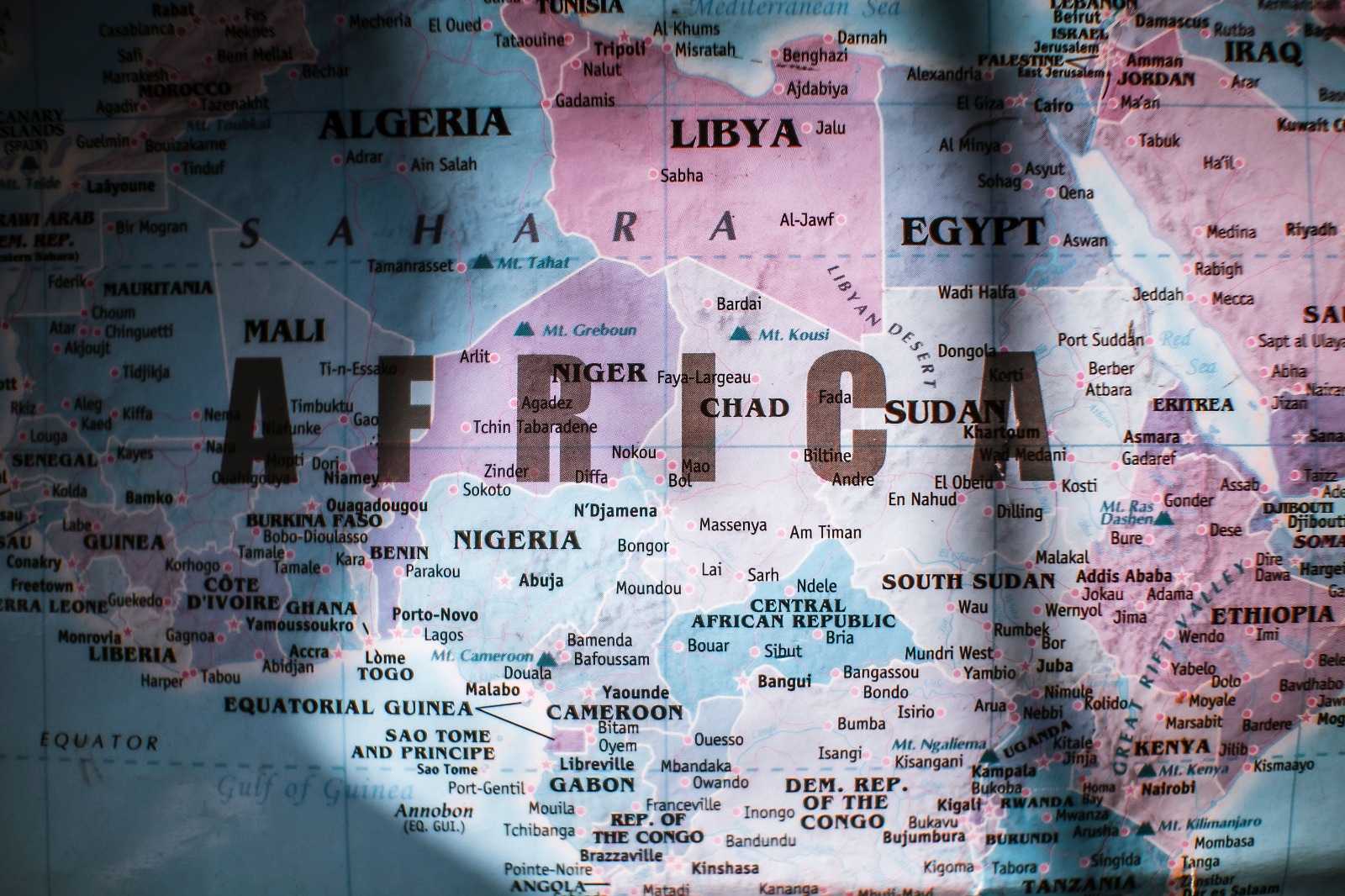
The result is a new African investment map.
The question for international businesses is no longer simply where is Africa growing?
It is:
Which market offers the right combination of growth, capital access, infrastructure, policy direction, market depth and risk for the particular business being built?
The Investment Map Is Becoming More Uneven
Africa's headline growth rate remains relatively strong.
The African Development Bank estimates that the continent grew by 4.4% in 2025 and projects 4.2% growth in 2026, despite geopolitical tensions, tighter financial conditions and supply-chain disruption. Yet the continental average conceals substantial differences between individual economies.
East Africa, for example, is expected to remain the continent's fastest-growing region, with growth estimated at 6.6% in 2025 before moderating to 5.9% in 2026. West Africa is forecast at 4.7% in 2026, while Southern Africa is expected to grow by only 2.1%.
This creates an important distinction between growth markets and capital markets.
The fastest-growing economy is not automatically the best location for a multinational headquarters.
A market with exceptional GDP growth may lack the banking depth, logistics, foreign-exchange liquidity, skilled labour or regulatory certainty required by an international investor.
Conversely, a slower-growing economy may offer superior access to capital, infrastructure, sophisticated professional services and regional headquarters functions.
Africa's investment landscape must therefore be assessed across several dimensions rather than through GDP growth alone.
The Four Investment Africas
Aldrenor's assessment of the current landscape identifies four broad investment profiles.
1. Capital Anchors
These are markets where financial depth, infrastructure, corporate ecosystems and international connectivity make them natural bases for regional expansion.
Egypt, South Africa, Morocco and Nigeria sit prominently within this group, although their risk profiles differ substantially.
2. Growth Platforms
These markets combine strong structural growth with expanding consumer demand, improving infrastructure and increasing private-sector opportunity.
Kenya, Ethiopia, Tanzania, Côte d'Ivoire, Senegal and Rwanda are among the most important examples.
3. Strategic Resource Markets
These markets offer potentially exceptional returns from critical minerals, hydrocarbons, energy or major infrastructure projects, but investors must accept higher political, commodity, infrastructure or execution risks.
Guinea, the Democratic Republic of Congo, Zambia, Mozambique and Angola illustrate this category.
4. Frontier Repricing Markets
These are economies where reforms, macroeconomic stabilisation or market liberalisation could materially change the investment proposition if sustained.
The opportunity can be significant because valuations and market entry costs may remain relatively low.
The risk is that reforms may not translate into durable institutional improvement.
This distinction is increasingly important as international investors become more selective.
Egypt: Africa's Leading Capital Destination
Egypt has emerged as the clearest example of how scale, geography, infrastructure and reform can combine to attract capital.
UNCTAD's 2026 investment data places Egypt at the top of Africa's FDI rankings, with approximately US$15 billion in inflows in 2025. Other reporting based on the UNCTAD data puts the figure at approximately US$15.5 billion.
The country's advantage is not simply its population.
Egypt sits at the intersection of Africa, the Middle East, Europe and major maritime trade routes. It possesses the Suez Canal, a large domestic consumer market, extensive infrastructure and an established industrial base.
The investment proposition is consequently broad:
logistics and maritime infrastructure;
manufacturing;
energy;
construction;
tourism;
financial services;
consumer markets;
renewable energy; and
export-oriented industry.
The World Bank is also supporting reforms designed to increase private-sector participation, strengthen competition and improve Egypt's macroeconomic and fiscal resilience. A US$1 billion financing package approved in May 2026 is explicitly focused on private-sector-led job creation, investment and a greener economy.
Investment profile: Capital anchor / manufacturing and infrastructure gateway.
Primary advantage: Scale plus strategic geography.
Primary risk: Macroeconomic, currency and state-sector reform pressures.
Best suited to: Multinationals seeking a North Africa/Middle East gateway, manufacturers, infrastructure investors, logistics operators and consumer businesses.
Morocco: Africa's Industrial Gateway to Europe
Morocco represents perhaps the continent's clearest industrial upgrading story.
Its investment proposition is increasingly based on integration with European manufacturing supply chains, particularly automotive, aerospace, pharmaceuticals, renewable energy and increasingly electric-vehicle and battery value chains.
The country's advantage is structural: proximity to Europe, established ports, industrial zones, trade agreements, relatively sophisticated infrastructure and a deliberate industrial policy.
The World Bank approved US$500 million in 2026 to support Morocco's jobs and green-growth agenda, including clean energy, energy efficiency and export-oriented pharmaceutical industries.
A separate World Bank private-sector diagnostic identified opportunities in decentralised solar power, low-carbon textiles, argan-based cosmetics and marine aquaculture, estimating that reforms could unlock approximately US$7.4 billion in private investment across those four areas over five to ten years.
Morocco's broader infrastructure investment is also reinforcing its position as a regional platform. The World Bank reported in July 2026 that the economy was recording its strongest growth in more than a decade, supported by infrastructure investment and agricultural recovery.
Investment profile: Industrial gateway / export platform.
Primary advantage: Manufacturing integration and proximity to Europe.
Primary risk: Regulatory and skills constraints; competition for increasingly sophisticated industrial investment.
Best suited to: Automotive, aerospace, pharmaceuticals, renewable energy, logistics, tourism and European supply-chain diversification.
South Africa: Deepest Capital Market, Weakest Growth Story
South Africa presents one of the continent's most interesting contradictions.
Its economic growth is modest, but its financial infrastructure remains significantly deeper than most African peers.
Johannesburg remains a major corporate and financial centre, while the country has sophisticated banks, asset managers, insurers, professional-services firms, listed companies and capital markets.
That depth gives South Africa an advantage that headline GDP growth does not capture.
For multinational companies, the country can function as a regional command centre even when the underlying domestic growth rate is comparatively weak.
The IMF expects South African growth to remain around 1.1% in 2026, while noting that strengthened policy frameworks and structural reforms could support improvement over time.
The country's logistics and energy constraints remain significant risks. Yet reforms allowing greater private participation in rail and freight infrastructure are creating new investment opportunities.
A recent example is South African rail operator Traxtion's planned 3.4 billion rand investment in locomotives and wagons as private participation expands in regional freight networks.
Investment profile: Capital anchor / regional headquarters / infrastructure transition.
Primary advantage: Financial-market depth and institutional capability.
Primary risk: Low growth, electricity and logistics constraints, political and regulatory complexity.
Best suited to: Financial services, institutional investors, infrastructure, mining services, technology, healthcare and regional headquarters operations.
Nigeria: The High-Scale, High-Execution Market
Nigeria remains one of Africa's most strategically important investment markets because of its population, entrepreneurial ecosystem, natural resources, financial sector and consumer-market scale.
But Nigeria is fundamentally different from Morocco or Egypt.
It offers potentially enormous market opportunities alongside considerably higher execution risk.
Currency reform, subsidy removal, inflation and fiscal pressures have complicated the operating environment. Yet those same reforms have begun to change the investment proposition.
The IMF expects Nigeria to grow by approximately 4.1% in 2026, supported by improved macroeconomic stability and favourable terms of trade.
Reuters reported in June that investors were responding positively to reforms across African markets, including Nigeria, with subsidy reforms, greater central-bank reliability and improved regulatory conditions contributing to renewed investor interest.
Nigeria's opportunity is therefore increasingly about scale plus reform.
Its most compelling sectors include:
financial services;
fintech;
energy;
infrastructure;
consumer goods;
telecommunications;
logistics;
industrial manufacturing;
healthcare; and
digital services.
The central investment question is not whether Nigeria has demand.
It clearly does.
The question is whether businesses can operate profitably within the country's infrastructure, currency, regulatory and financing constraints.
Investment profile: High-growth capital anchor.
Primary advantage: Market scale and entrepreneurial depth.
Primary risk: Currency, infrastructure, inflation and execution.
Best suited to: Consumer businesses, fintech, energy, infrastructure, financial services, technology and companies prepared to build for scale.
Kenya: East Africa's Commercial and Technology Gateway
Kenya occupies a different position.
Its domestic market is smaller than Nigeria's or Egypt's, but Nairobi's combination of financial services, technology, logistics, telecommunications and regional connectivity gives it disproportionate strategic importance.
The World Bank expects Kenya's economy to grow by approximately 4.7% in 2026, with private consumption remaining a major driver and private investment expected to recover gradually.
More importantly, Kenya functions as an East African business platform.
The country hosts major regional financial institutions, technology companies, development organisations and multinational headquarters.
Its investment ecosystem is particularly relevant to:
fintech;
digital services;
logistics;
agribusiness;
healthcare;
renewable energy;
telecommunications;
consumer technology; and
regional services.
The World Bank identifies Kenya as an East African hub for finance, innovation, logistics, healthcare and technology, while IFC investment spans financial institutions, manufacturing, agribusiness, services and infrastructure.
Investment profile: Growth platform / regional headquarters.
Primary advantage: Technology, services and East African connectivity.
Primary risk: Fiscal pressures and debt vulnerabilities.
Best suited to: Technology, financial services, regional services, agribusiness, logistics and consumer platforms.
Ethiopia: Scale Meets Reform
Ethiopia is one of the continent's most important long-term growth markets.
Its investment proposition is based on population scale, industrialisation potential, agricultural resources and gradual economic liberalisation.
The African Development Bank continues to identify Ethiopia among the continent's stronger growth economies, while East Africa's overall expansion remains the fastest on the continent.
Ethiopia is particularly relevant to investors interested in:
manufacturing;
agriculture and agro-processing;
logistics;
telecommunications;
consumer markets;
renewable energy; and
industrial infrastructure.
The opportunity is substantial because the market is large and industrial penetration remains comparatively low.
The risk is equally important.
Foreign-exchange constraints, infrastructure requirements, political complexity and the pace of reform mean Ethiopia is not a low-risk market.
It is a long-duration growth proposition.
Tanzania and the East African Growth Corridor
Tanzania is increasingly important because it combines population growth, natural resources, infrastructure development and access to the Indian Ocean.
The African Development Bank expects Tanzania to remain among East Africa's resilient growth markets as regional expansion moderates in 2026.
The investment thesis is strongest in:
mining;
energy;
transport;
logistics;
tourism;
agriculture;
manufacturing; and
consumer markets.
The country's strategic geography gives it additional importance as East Africa develops alternative trade corridors.
For investors seeking exposure to East African growth without relying exclusively on Kenya, Tanzania is becoming increasingly difficult to ignore.
Rwanda, Côte d'Ivoire and Senegal: Smaller Markets, Stronger Reform Signals
Not every attractive African investment destination needs to be a giant economy.
Rwanda demonstrates how institutional reform and policy consistency can create an investment proposition disproportionate to domestic market size.
Côte d'Ivoire, meanwhile, is increasingly important as a West African commercial and financial centre.
Senegal has strengthened its position through infrastructure development, energy investment and improving regional connectivity.
The AfDB's 2025 outlook identified Rwanda, Senegal and several other economies among Africa's fastest-growing markets.
These markets are particularly relevant for investors looking for:
first-mover advantage;
infrastructure;
logistics;
consumer services;
financial inclusion;
agribusiness;
tourism; and
regional platforms.
Their limitation is market size.
Their advantage is that smaller markets can sometimes move faster when institutional reforms are coherent and investment bottlenecks are clearly targeted.
The High-Risk, High-Return Resource Belt
The investment map becomes considerably more complex when capital follows minerals and energy.
Guinea, the Democratic Republic of Congo, Zambia, Mozambique and Angola are increasingly important because of critical minerals, hydrocarbons, energy infrastructure and major transport corridors.
UNCTAD reports that energy, infrastructure and critical minerals continue to attract investment across Africa, but that the benefits remain concentrated in relatively few countries and sectors.
This is where investors are accepting higher political, infrastructure and commodity risk in exchange for potentially exceptional returns.
The opportunity is especially significant because global investment is increasingly being directed towards strategic resources required for energy transition, industrialisation and technological infrastructure.
But resource abundance should not be confused with investability.
A mine can be commercially attractive while the surrounding logistics, electricity, governance or fiscal regime remains problematic.
That means resource markets increasingly require project-specific intelligence rather than country-level assumptions.
Where Capital Is Moving
The geographic split is only half of the story.
Capital is also becoming more concentrated by sector.
UNCTAD identifies strategic industries—including AI infrastructure, semiconductors, critical minerals, energy-transition technologies and advanced manufacturing—as capturing an increasing share of global investment.
Africa's strongest opportunities therefore increasingly sit where continental advantages intersect with global strategic demand.
Energy
Energy remains one of Africa's largest investment opportunities.
The continent's electricity deficit creates enormous domestic demand, while renewable resources provide opportunities in solar, wind, geothermal, storage and grid infrastructure.
Critical Minerals
Copper, cobalt, lithium, graphite and other strategic minerals are attracting international attention.
The major question is whether Africa can move from extraction towards processing and manufacturing.
Digital Infrastructure
Data centres, fibre networks, cloud infrastructure and AI-related investment are becoming increasingly important.
But this sector also demonstrates the geographical concentration problem.
Recent investment announcements involving Kenya, South Africa and Nigeria illustrate the emergence of a small number of African digital hubs. The IMF has warned that weak electricity, internet connectivity and digital skills could prevent many countries from capturing the benefits of AI.
Manufacturing
Morocco, Egypt, South Africa and increasingly Ethiopia and selected East African markets are positioned to benefit from supply-chain diversification.
The opportunity is strongest where infrastructure, trade access and industrial policy align.
Consumer Markets
Nigeria, Egypt, Ethiopia, Kenya, South Africa and Tanzania offer different versions of the same structural opportunity: rapidly expanding consumer demand.
But investors should distinguish between population size and effective purchasing power.
The most attractive consumer markets will be those where urbanisation, formal employment, digital payments, logistics and household incomes are expanding together.
Where International Businesses Should Establish Their Next Foothold
For an international company entering Africa, the decision should not begin with the question:
"Which country is the biggest?"
It should begin with:
"What function does Africa need to perform in our global strategy?"
If the objective is regional headquarters and financial connectivity, South Africa, Kenya and Egypt become particularly relevant.
If the objective is manufacturing for European markets, Morocco stands out.
If the objective is consumer-market scale, Nigeria and Egypt offer exceptional potential, while Kenya, Ethiopia and Tanzania provide important East African alternatives.
If the objective is technology and digital services, Kenya, Nigeria, South Africa and Egypt are increasingly important.
If the objective is energy and critical minerals, the investment map extends towards Zambia, DRC, Guinea, Mozambique, Angola and other resource-rich markets.
If the objective is first-mover growth, Rwanda, Senegal, Côte d'Ivoire, Tanzania and Ethiopia deserve closer consideration.
The strategic answer may also be multiple markets rather than one.
A multinational could establish a financial and regional management centre in Johannesburg, a technology operation in Nairobi, manufacturing in Morocco and consumer distribution in Nigeria.
That is increasingly what the African investment map demands: a portfolio strategy rather than a single-country bet.
What Serious Investors Should Watch Next
Five signals will determine whether today's emerging investment centres consolidate their positions.
1. Reform durability
Investors are increasingly rewarding countries that demonstrate reforms over several years rather than announcing isolated policy changes.
2. Domestic capital mobilisation
Africa cannot rely indefinitely on foreign capital.
The AfDB's 2026 outlook places significant emphasis on mobilising domestic resources and attracting long-term capital in a world of declining aid flows and higher financing constraints.
3. Infrastructure execution
The next generation of African investment centres will be determined by who can actually deliver reliable electricity, transport, ports, digital connectivity and industrial infrastructure.
4. Regional integration
AfCFTA has the potential to change the economics of African manufacturing and distribution by allowing businesses to build for a continental rather than purely national market.
The winners will be countries positioned along major trade corridors and companies capable of operating across borders.
5. Sector depth
A country may attract one large investment without developing a durable investment ecosystem.
The stronger signal is whether one investment attracts suppliers, competitors, financiers, skilled workers, logistics providers and complementary businesses.
That is how an investment destination becomes an economic cluster.
Executive Outlook
Africa's investment opportunity is becoming more concentrated, more specialised and more competitive.
The continent is no longer adequately described by a simple narrative of "Africa rising".
Some markets are developing deep capital ecosystems.
Others are becoming manufacturing platforms.
Others are attracting technology investment.
Others are offering exceptional resource opportunities at significantly higher risk.
And a smaller group is attempting to reposition itself through reform before international capital fully reprices the opportunity.
That divergence is likely to become more pronounced.
UNCTAD's latest investment data already shows the underlying pattern: African FDI remains well above its historical average, but investment is concentrated in strategic sectors and a limited number of markets.
For investors, this means the next phase of African investment will be less about discovering whether Africa is investable and more about determining where, at what price, through which sector and with what risk structure.
For international businesses, the implication is even more important.
Africa should no longer be treated as a single expansion market.
It should be approached as a network of different economic systems; capital centres, industrial platforms, technology hubs, consumer markets, resource corridors and reforming frontier economies.
The businesses that understand those differences will be able to allocate capital more intelligently, build regional strategies faster and avoid treating fundamentally different risk environments as if they were interchangeable.
The African investment map is splitting. The strategic advantage will belong to investors who can read the new map before everyone else does.
Sources
UNCTAD — Africa Is Attracting Investment in Strategic Industries
African Development Bank — Africa's Growth Holds Firm Amid Global Turbulence
African Development Bank — East Africa Economic Outlook 2026
IMF — Regional Economic Outlook for Sub-Saharan Africa, April 2026
World Bank — Sub-Saharan Africa's Growth Holds, But Downside Risks Mount
World Bank — Egypt Private-Sector and Green-Economy Financing
Reuters — Standard Chartered: Reforms Win Back Investors to Africa
Reuters — South Africa's Traxtion Bets on Regional Rail Reforms and Mineral Boom
Reuters — AI Could Lift Sub-Saharan Africa Economy if Power and Internet Improve