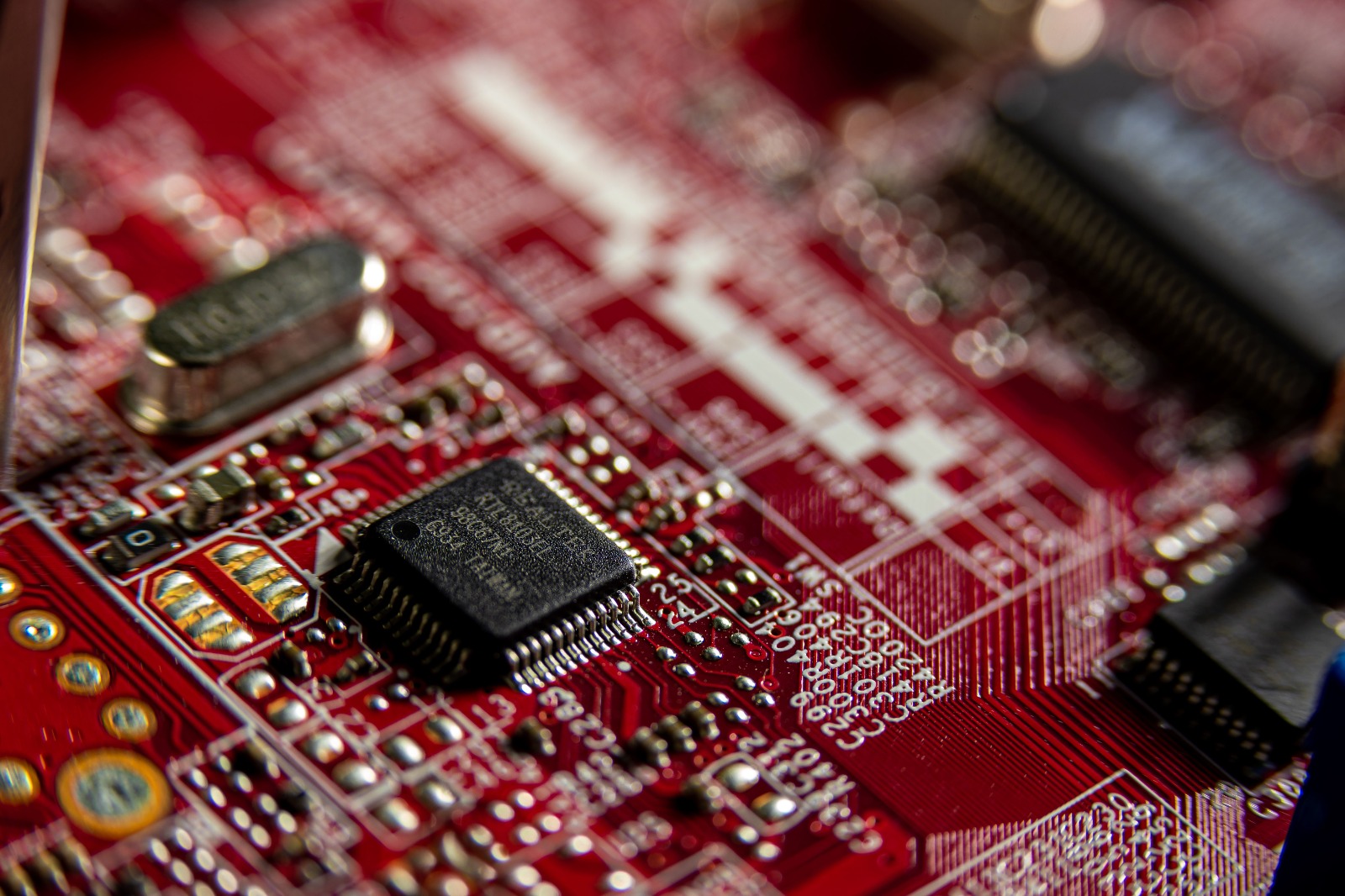
The investment commitments, announced by South Korean authorities, cover sectors considered strategically important to both countries. Semiconductors and advanced materials sit at the heart of modern manufacturing, while energy investment is becoming increasingly important as governments seek resilient domestic supply chains.
For Seoul, the commitments offer more than an immediate injection of capital. They support an industrial strategy aimed at strengthening South Korea's position in technologies where supply-chain security has become a matter of national policy.
Semiconductors are particularly important. South Korea is already home to major memory-chip manufacturers and a sophisticated electronics ecosystem, but the industry faces increasing competition from China, Taiwan, the United States, and other Asian economies.
The U.S. dimension is equally significant. Washington has increasingly encouraged allied economies to build critical production capacity within trusted supply networks. Investment in South Korea can therefore serve both commercial and strategic objectives.
The relationship also reflects a wider restructuring of globalisation. Companies are no longer making investment decisions solely on labour costs, market access or tax incentives. Political stability, technology controls, supply-chain resilience and access to strategic infrastructure are increasingly determining where capital is deployed.
Energy investment adds another layer. Industrial production, particularly semiconductor manufacturing, requires reliable supplies of electricity and advanced infrastructure. South Korea's ability to expand technology capacity will therefore depend partly on the resilience of its energy system.
The $2 billion commitment is modest relative to the scale of the global semiconductor industry, but its strategic significance may be greater than the headline value suggests. It reinforces the emergence of an interconnected U.S.-South Korean industrial ecosystem spanning chips, materials and energy.
Aldrenor Intelligence View: Capital is increasingly following geopolitical alignment. South Korea's latest commitments demonstrate how technology investment is becoming part of national-security strategy, with trusted supply chains replacing pure cost efficiency as a central consideration in corporate expansion.