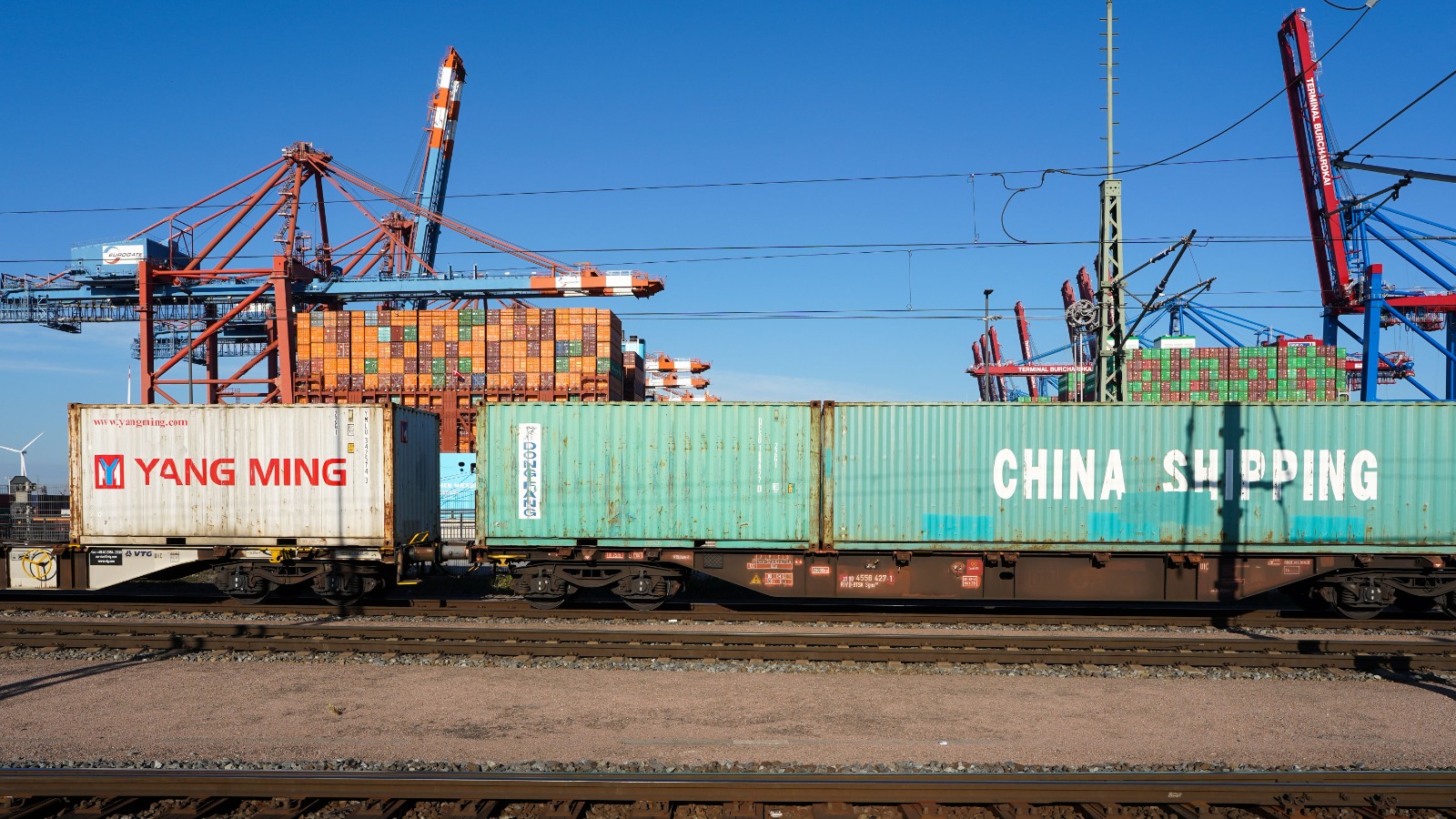
Chinese exports rose 25% year on year in August, supported by strong demand for high-technology and artificial-intelligence-related products. Imports increased 28.2%, while the country's trade surplus reached $119.09 billion.
The figures provide an important source of support for an economy still dealing with weak consumption, subdued investment and continued difficulties in the property sector.
But the composition of growth matters.
China's export performance increasingly reflects the ability of its industrial base to compete overseas even as domestic consumers remain cautious. The divergence is particularly visible in the automotive industry, where manufacturers are expanding international sales while domestic demand continues to weaken.
Passenger-vehicle exports rose 77.5% year on year in August to 894,000 units, while domestic sales declined 23.7% for an 11th consecutive month. Electric and plug-in hybrid exports increased 154.7%, contrasting with a 10.1% decline in domestic sales of those vehicles.
The result is a growing dependence on overseas markets to absorb Chinese industrial capacity.
That strategy provides manufacturers with an important outlet, but it also introduces new geopolitical and regulatory risks. Chinese exporters are increasingly encountering scrutiny over pricing practices, market access and the impact of industrial competition on local manufacturers abroad.
Beijing's challenge is therefore becoming two-sided. It must maintain export competitiveness without allowing the external sector to become a substitute for stronger domestic consumption.
The latest trade data also reduce pressure for immediate monetary easing by demonstrating that China's industrial sector remains capable of generating substantial external demand. Yet strong exports cannot fully compensate for weak household confidence and a prolonged property downturn.
The imbalance carries implications beyond China.
A sustained expansion of Chinese exports could intensify competition for manufacturers in Europe, Asia and other emerging markets. At the same time, stronger Chinese demand for imported commodities and technology could support global suppliers.
The central question is whether exports can continue to carry China's growth without creating a larger external backlash.
For now, the data show an economy with considerable industrial momentum but an uneven domestic recovery. The strength of China's export machine is increasingly becoming both an economic asset and a source of strategic tension.