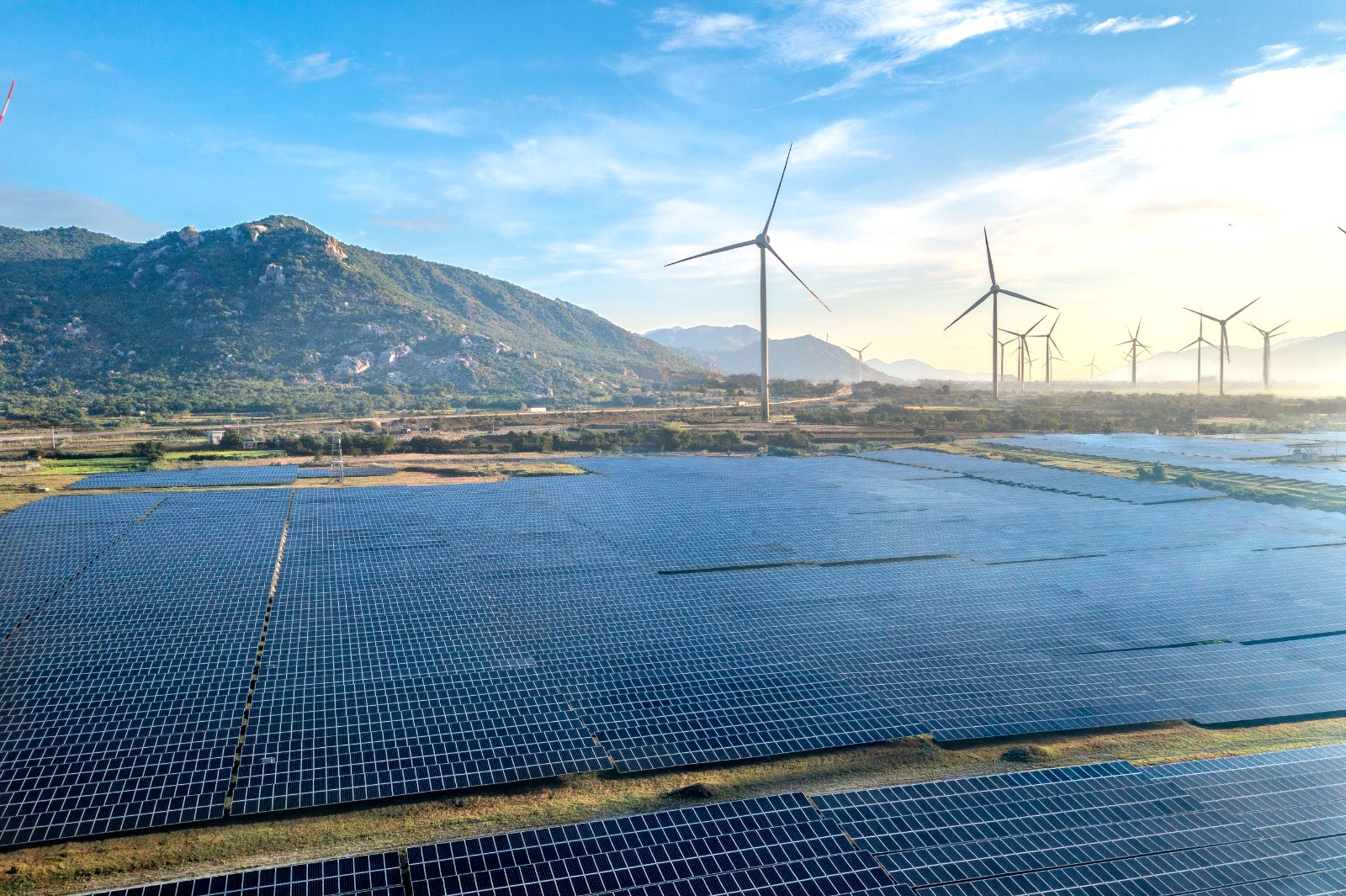
The proposed financing support would target renewable projects that have suffered financial losses because electricity generated by solar and other clean-energy facilities cannot always reach the national grid.
India's solar capacity has expanded rapidly, reaching about 162 gigawatts, or roughly one-third of the country's total power capacity. But transmission networks have not expanded at the same pace, leaving renewable generators in states such as Rajasthan and Gujarat exposed to periods when electricity output must be curtailed.
Industry sources estimate that renewable producers have suffered about 45 billion rupees ($470 million) in losses since February 2025. In some cases, between 70% and 80% of available renewable generation has reportedly been unable to reach the grid.
The problem highlights an increasingly important issue for investors in emerging-market energy infrastructure: generation capacity alone does not guarantee usable electricity.
Between April and June, India curtailed 8,133 gigawatt-hours of solar generation, equivalent to about 14% of output during the period. The losses increase financing risks because lenders may become more cautious when projects are unable to sell electricity consistently.
The Indian power ministry is discussing potential compensation mechanisms with producers, including low-interest loans with maturities of seven to eight years.
For policymakers, the challenge is becoming a question of infrastructure sequencing. Continued investment in solar capacity without corresponding expansion of transmission networks could increase the financial pressure on developers while reducing the economic return from new generation assets.
For investors, the issue may also alter the risk assessment of renewable projects. Transmission availability, grid connectivity and curtailment exposure are likely to become increasingly important factors in project financing and valuation.
India's experience also carries wider implications for other emerging economies attempting to accelerate renewable deployment. Large-scale generation projects require complementary investment in transmission, storage and grid management if clean-energy capacity is to translate into reliable economic output.
What to watch: government decisions on compensation and financing support, new transmission investment and whether future renewable projects are approved alongside adequate grid capacity.