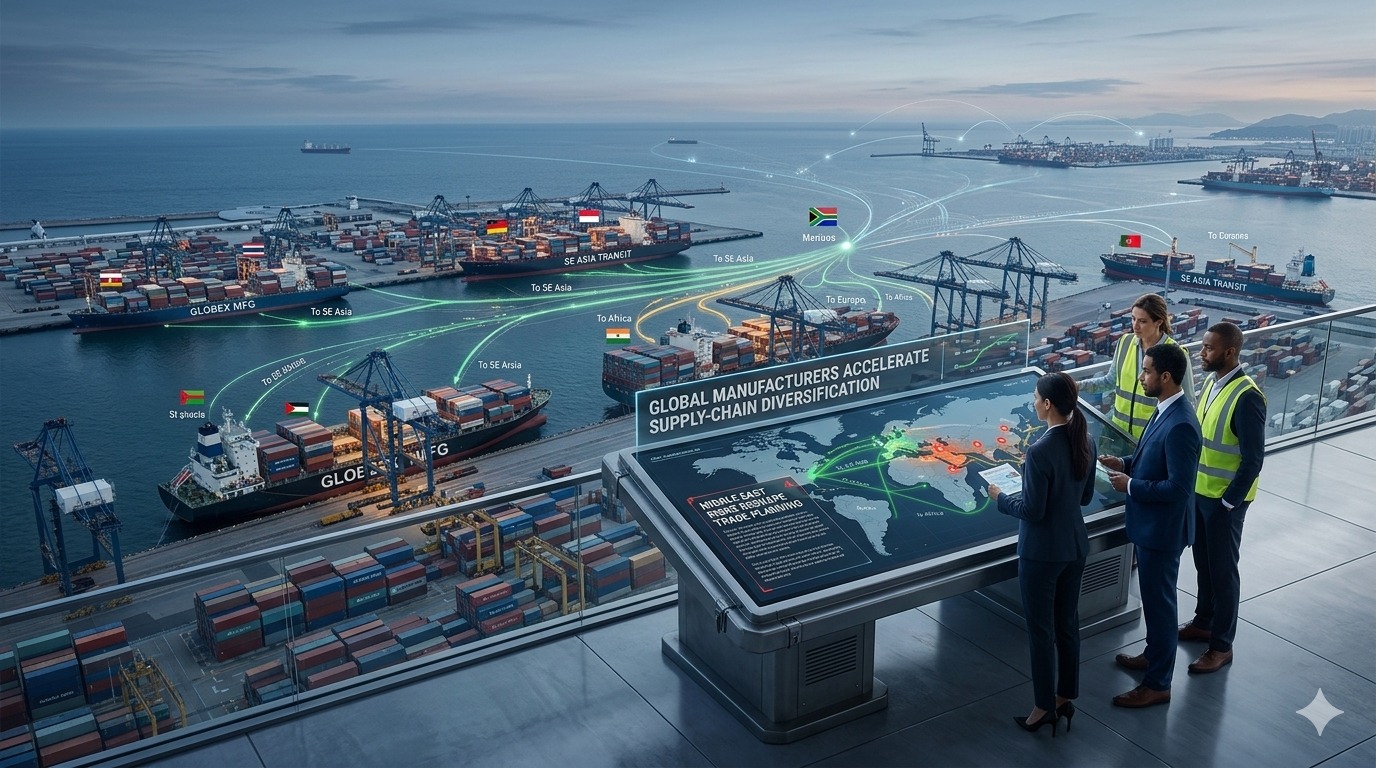
Corporate executives, logistics providers and procurement leaders are increasingly reassessing sourcing strategies amid uncertainty surrounding global shipping routes and energy markets. While immediate disruptions remain limited, businesses are treating recent events as another reminder of the vulnerabilities exposed by geopolitical tensions in strategically important regions.
Industries dependent on complex international supply networks—including automotive manufacturing, industrial equipment, chemicals, consumer goods and electronics—have intensified efforts to expand supplier bases and reduce reliance on single-country sourcing models.
The shift reflects a broader transformation in corporate strategy that began during the pandemic and accelerated through years of geopolitical fragmentation, trade disputes and regional conflicts. What was once considered a cost-efficiency exercise has increasingly become a risk-management priority.
Shipping operators and insurers have reported heightened interest in contingency planning as businesses seek alternatives to routes vulnerable to disruption. Inventory strategies are also evolving, with some companies maintaining larger stock levels of critical inputs despite the additional carrying costs involved.
Analysts say supply-chain resilience is becoming a competitive advantage rather than a defensive measure. Firms capable of maintaining operational continuity during periods of volatility may gain market share and strengthen customer confidence.
The implications extend beyond individual companies. Governments are increasingly supporting domestic manufacturing capabilities and strategic industrial investments to reduce exposure to external shocks affecting critical sectors.
Economists warn that prolonged supply-chain restructuring could contribute to higher production costs across some industries, potentially influencing inflation trends and consumer prices. However, many executives argue that the cost of diversification is outweighed by the risks associated with disruption.
For investors, the trend signals a deeper shift in how businesses allocate capital and assess operational risk. Supply-chain resilience is emerging as a core component of long-term corporate strategy in an increasingly uncertain global environment.