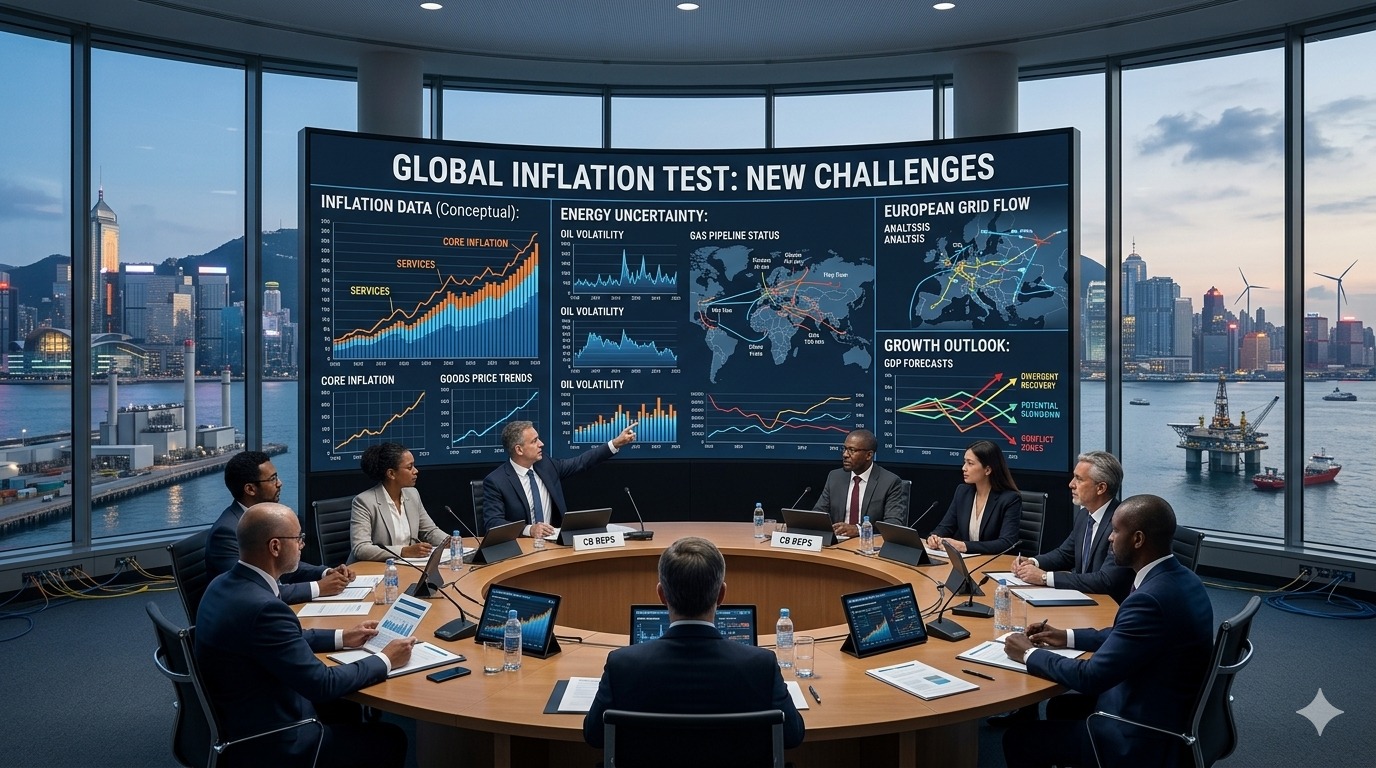
After months of optimism that inflation pressures were gradually easing, policymakers are increasingly assessing the potential impact of geopolitical developments on energy prices, transportation costs and broader consumer inflation trends. The changing environment has raised questions about the timing and pace of future interest-rate adjustments.
Monetary authorities in the United States, Europe and several emerging markets have signaled caution in recent weeks, emphasizing the need to remain data-dependent while monitoring risks linked to commodity markets and global trade conditions.
The challenge is particularly significant because higher energy costs affect multiple sectors simultaneously. Rising fuel and transportation expenses can influence manufacturing, logistics, food production and household spending, creating inflationary pressures that extend beyond the energy sector itself.
Economists say policymakers now face a more complex landscape than anticipated at the start of the year. While growth in several economies remains moderate, inflation risks have become more difficult to predict amid heightened geopolitical uncertainty and fluctuating commodity prices.
Governments are also monitoring the potential fiscal implications. Higher borrowing costs and slower growth could place additional pressure on public finances at a time when many countries continue managing elevated debt levels and investment priorities.
Financial markets have responded cautiously, with investors reassessing expectations for monetary easing and evaluating how central banks may respond if inflation proves more persistent than previously forecast.
Business leaders are likewise watching closely. Borrowing costs, investment decisions and corporate expansion plans remain heavily influenced by interest-rate expectations and broader economic confidence.
For policymakers, the months ahead will likely require balancing competing priorities: supporting economic activity while ensuring inflation remains under control. The outcome will play a significant role in shaping investment, consumer confidence and global economic performance through the remainder of 2026.