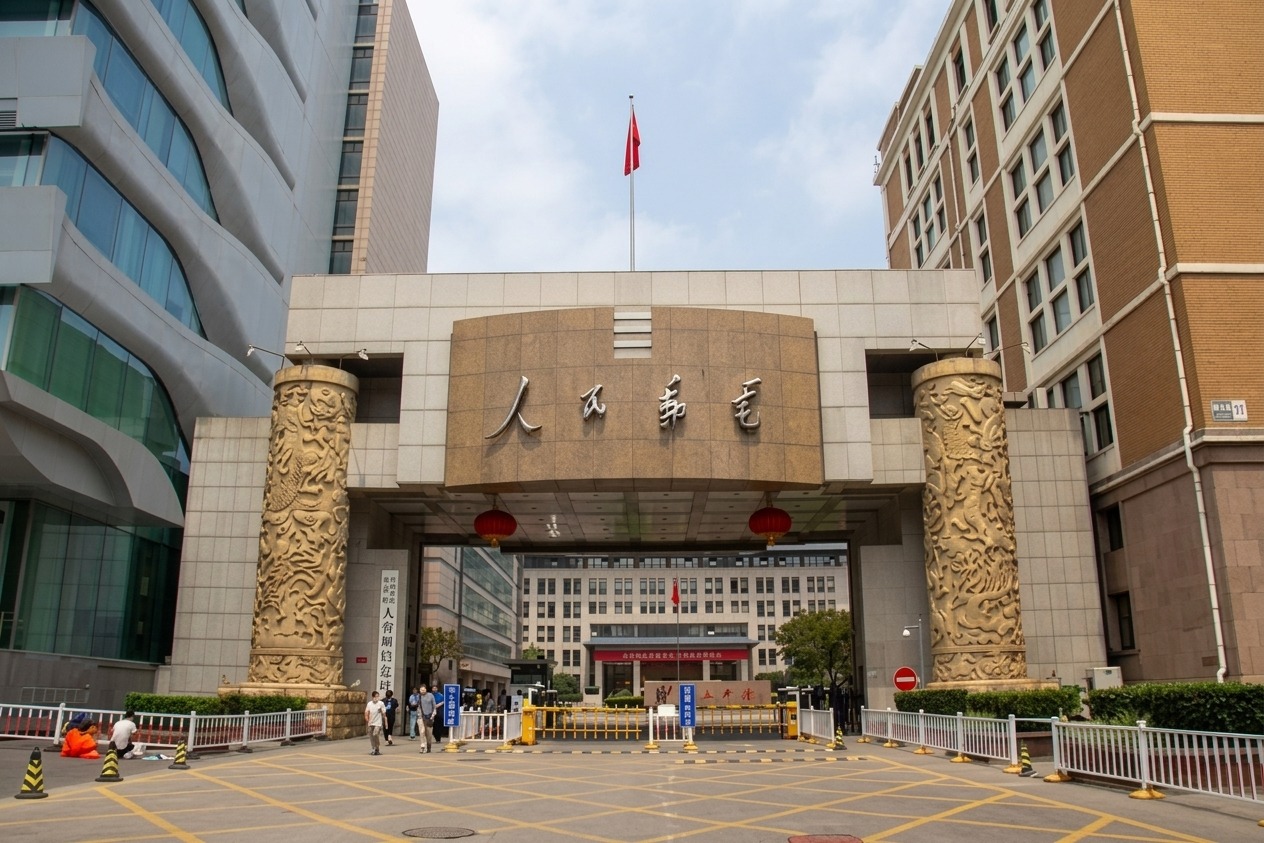

The review, reported by the Financial Times and cited by Investing.com, involves China's State-owned Assets Supervision and Administration Commission, which has surveyed the use of Broadcom switches at state-controlled data centres.
The assessment could have significant implications for Broadcom because its switches reportedly account for a substantial share of networking equipment at some Chinese state-owned companies. The review comes as Beijing continues to promote greater domestic sourcing of semiconductors and other technology components.
China has increasingly treated computing infrastructure as a strategic industry, particularly as artificial intelligence expands demand for data centres, advanced networking equipment and high-performance computing systems. The country's policy direction has encouraged state-backed organisations to increase the use of domestically produced technology.
Broadcom, Nvidia and Huawei are among suppliers serving China's data-centre market. Restrictions affecting Nvidia products have already increased pressure on technology companies operating within the Chinese market, while domestic firms such as Huawei, H3C Technologies and Ruijie Networks stand to benefit from efforts to increase local procurement.
For international semiconductor and networking companies, the review illustrates the growing importance of technology policy in determining market access. Chinese demand remains commercially significant, but geopolitical tensions between Beijing and Washington have increased regulatory and supply-chain risks for US technology companies.
The development also highlights the strategic importance of networking equipment within the wider AI infrastructure cycle. Data-centre investment is increasingly dependent not only on processors but also on high-speed switches and communications systems capable of connecting large numbers of computing units.
A broader shift towards domestic sourcing could therefore influence procurement decisions across China's expanding AI and cloud-computing ecosystem.
For investors and technology companies, the immediate question is whether the review results in formal restrictions, informal procurement guidance or a gradual shift in purchasing preferences. Any sustained reduction in foreign hardware usage would increase competitive opportunities for Chinese suppliers while adding another layer of uncertainty for multinational technology companies operating in the country.