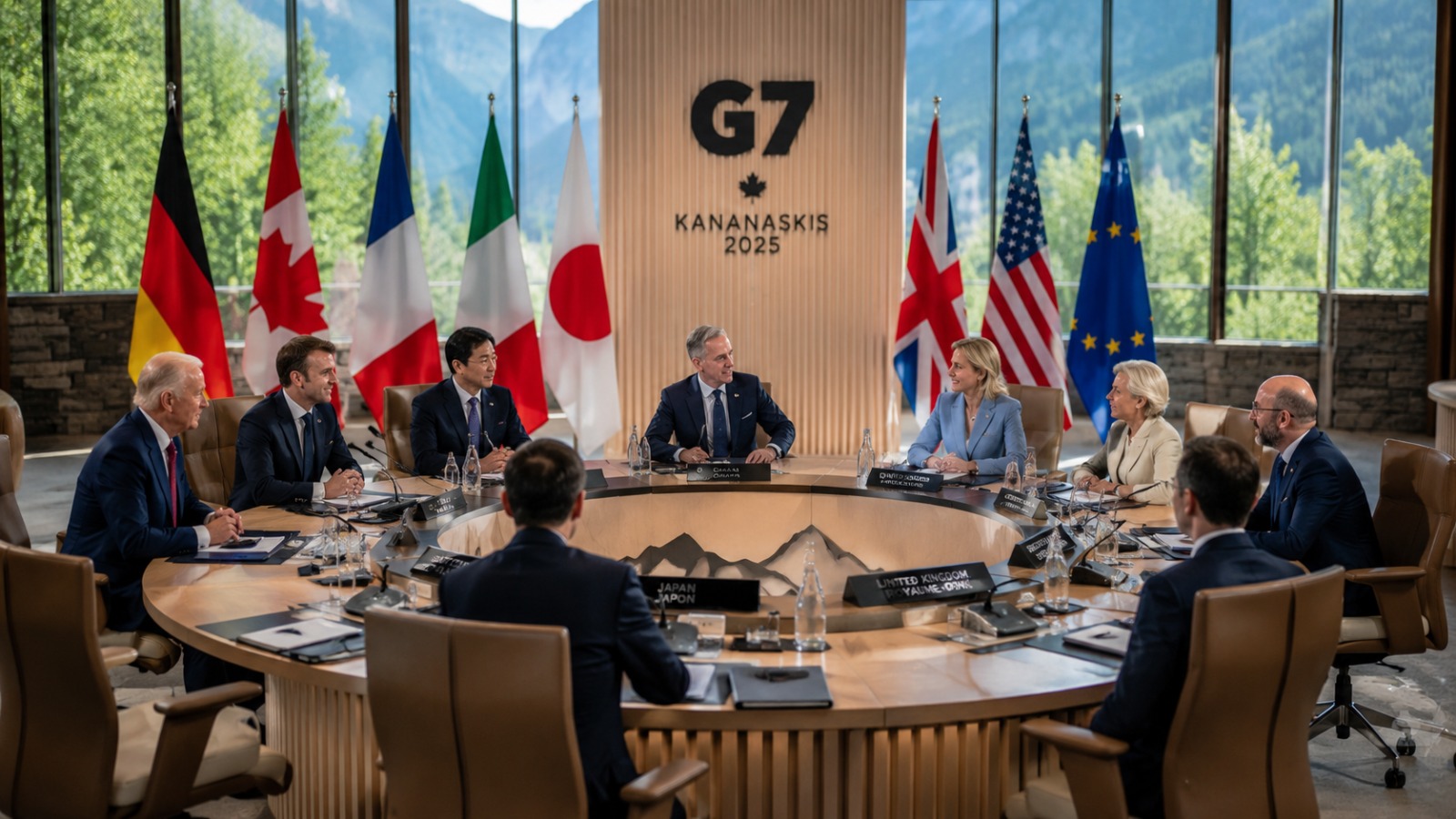
The summit, initially expected to focus heavily on inflation, industrial competitiveness and trade tensions, has taken on new significance following the emergence of a framework agreement aimed at reducing tensions between the United States and Iran. The development has altered market expectations and introduced new opportunities for policymakers to address longer-term economic priorities.
Officials attending the summit are expected to discuss how a more stable geopolitical environment could influence global growth, investment flows and energy security. While leaders welcomed signs of de-escalation, several cautioned that durable stability would require sustained diplomatic engagement and continued international cooperation.
The G7 meeting comes at a time when governments are confronting multiple challenges, including slower economic growth, elevated public debt, supply-chain vulnerabilities and increasing competition over technology and industrial policy. The easing of immediate tensions in the Gulf has provided policymakers with greater flexibility to focus on structural issues that will shape economic performance over the coming decade.
Business leaders and investors are closely monitoring summit discussions for signals regarding trade policy, infrastructure investment, energy transition strategies and cooperation on emerging technologies. Many see the current moment as an opportunity for governments to strengthen economic resilience while reducing exposure to future geopolitical shocks.
Economists note that the relationship between geopolitics and economics has become increasingly intertwined. Decisions made by world leaders on security, trade and diplomacy now carry direct implications for inflation, investment and market stability.
The summit is also expected to address issues ranging from climate finance and artificial intelligence governance to development financing and global supply chains. Several participants have emphasised the need for stronger international coordination in an era characterised by rising uncertainty and economic fragmentation.
For businesses and investors, the significance of the summit extends beyond diplomatic symbolism. The policy direction emerging from G7 discussions could influence capital flows, regulatory environments and growth prospects across major economies.
As leaders meet against a backdrop of shifting geopolitical realities, the central challenge remains how to translate diplomatic progress into lasting economic stability and sustainable global growth.