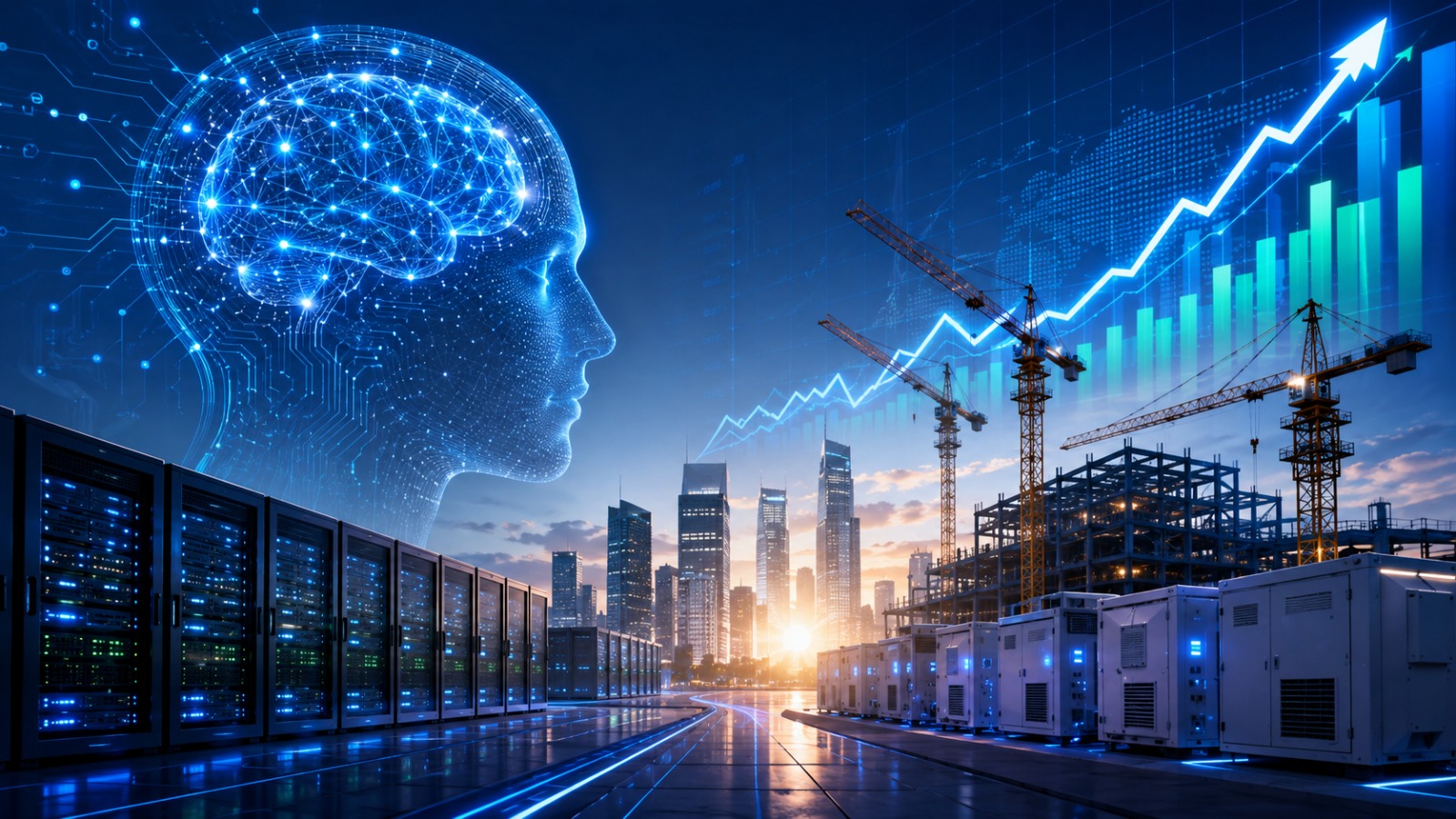
Technology companies continue committing record levels of capital to data centres, semiconductor manufacturing, cloud computing and high-performance networking as demand for advanced AI systems accelerates. Yet market participants increasingly view infrastructure economics—not model capability alone—as the defining factor that will determine which companies emerge as long-term winners.
The transition reflects a broader maturation of the AI economy. Over the past two years, enthusiasm surrounding generative artificial intelligence fuelled substantial gains across technology equities and triggered unprecedented investment in computing capacity. Today, investors are asking a different question: whether the enormous capital expenditure required to build AI infrastructure can consistently generate profitable and sustainable returns.
Demand for advanced processors, energy-efficient data centres and specialised networking equipment continues to reshape global supply chains, benefiting semiconductor manufacturers, cloud service providers, engineering firms and electricity infrastructure developers. At the same time, rising energy consumption associated with AI workloads is increasing pressure on utilities and governments to expand electricity generation while maintaining reliability and affordability.
Corporate adoption is also evolving. Financial institutions, manufacturers, healthcare providers and logistics companies are moving beyond pilot programmes to integrate artificial intelligence into core business operations, with investment decisions increasingly tied to measurable improvements in productivity, operational efficiency and cost reduction.
Governments are responding by accelerating investment in digital infrastructure while reviewing regulatory frameworks covering data governance, cybersecurity, competition policy and responsible AI deployment. Policymakers increasingly view artificial intelligence as both an economic opportunity and a strategic national capability capable of influencing long-term competitiveness.
For investors, the industry's next phase is expected to be defined less by technological speculation and more by execution. Companies demonstrating scalable infrastructure, disciplined capital allocation and clear commercial applications are likely to attract greater confidence than those relying primarily on future growth expectations.
The evolution of AI investment underscores a broader transformation in the global economy. Artificial intelligence is no longer simply a technology story—it is becoming a foundational layer of industrial competitiveness, capital allocation and economic productivity. For executives, policymakers and investors alike, the central challenge is no longer whether AI will reshape industries, but how to build the infrastructure capable of supporting its long-term economic value.