
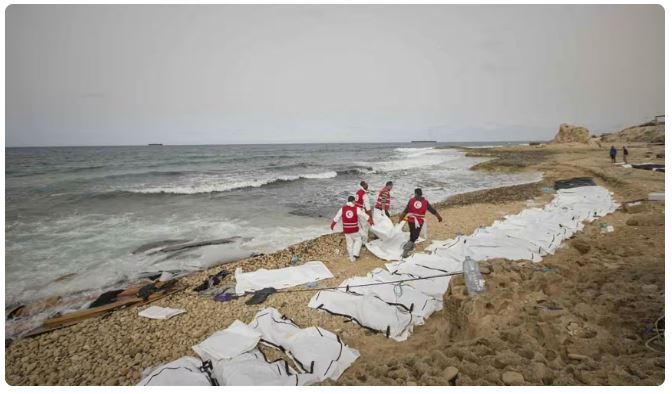
IFRC MENA/Twitter
The incident highlights the continuing dangers along a migration route used by people seeking to reach Europe after travelling through Libya, a major transit point for migrants from sub-Saharan Africa and other regions.
The immediate tragedy also carries broader implications for governments and international institutions responsible for migration management, search-and-rescue operations and border policy.
Libya's position along the central Mediterranean route means that instability, trafficking networks, weak enforcement and limited safe migration channels can combine to increase the risks faced by migrants. Reuters has separately reported prosecutions of trafficking networks and other migrant deaths connected to sea crossings, illustrating the continuing difficulty of disrupting the networks that facilitate dangerous journeys.
For European governments, persistent migration flows create pressure on border systems, asylum processing and humanitarian infrastructure. For Libya, the issue intersects with domestic security challenges and the country's wider institutional fragmentation.
The deaths also underline the limits of policies that focus primarily on preventing crossings without addressing the conditions that drive migrants towards irregular routes.
From an economic perspective, migration policy also affects labour markets, public expenditure and regional development. Many migrants leave countries affected by conflict, weak employment opportunities or economic insecurity, making migration both a humanitarian and economic issue.
Aldrenor's focus should remain on the verified facts rather than assigning responsibility without evidence. The Red Crescent's account establishes the immediate cause of the latest deaths as a boat capsizing; wider questions surrounding trafficking, maritime safety and migration policy require separate evidence.
What to watch: further recovery operations, Libyan investigations, European migration-policy responses, trafficking prosecutions and changes in maritime rescue activity.
The incident demonstrates that Mediterranean migration remains not only a humanitarian challenge but also a test of regional governance, border policy and institutional capacity.